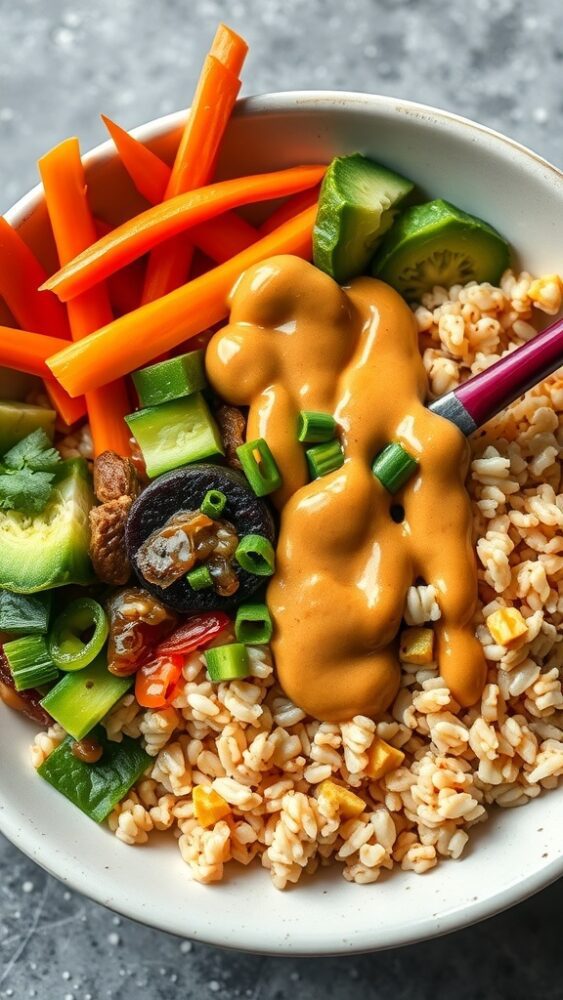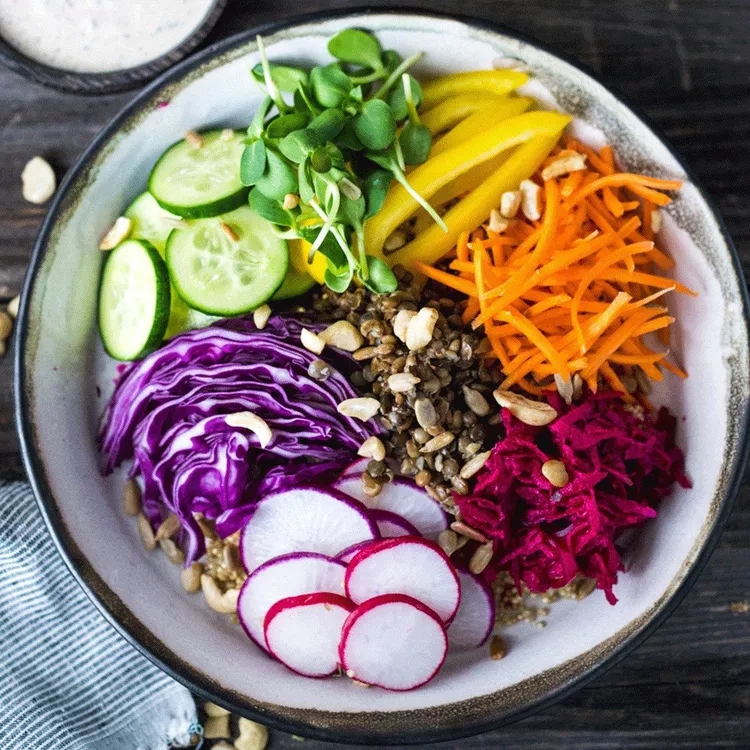
There’s something oddly grounding about assembling a Buddha bowl — the rhythmic chopping, the mix of colors, the quiet promise that lunch is about to be both beautiful and good for you. The Rainbow Buddha Bowl is that kind of meal. It’s fresh, nourishing, and unapologetically colorful — the kind of dish that almost looks too pretty to eat until you do, and then you’re scraping the last grains of rice off your bowl before you even realize it.
This recipe isn’t just about piling vegetables together — it’s about balance. You’ve got creamy, crunchy, tangy, and hearty all working together in harmony. A bowl of this feels like the kind of meal your body thanks you for.
Where It Comes From
The term Buddha bowl has a few origin stories. Some say it comes from Buddhist monks who filled their bowls with small portions of whatever food villagers offered during alms rounds — a symbol of gratitude and mindfulness. Others believe the name refers to the “rounded belly” shape of the full bowl, resembling a laughing Buddha.
While the modern Buddha bowl may not be strictly tied to those traditions, it carries that same spirit: balance, nourishment, and mindfulness. The Rainbow version simply celebrates color — and with color comes nutrients. Every hue brings something different to the table, from the beta-carotene in orange sweet potatoes to the anthocyanins in purple cabbage.
Ingredient Spotlight
What makes this dish shine is the combination of color, texture, and flavor. You can swap ingredients seasonally, but here’s the foundation:
- Base: Cooked quinoa, brown rice, or mixed greens
- Protein: Crispy tofu, chickpeas, or tempeh (roasted for extra bite)
- Veggies:
- Red bell peppers
- Roasted sweet potatoes
- Shredded purple cabbage
- Cucumbers
- Carrots (ribbons or julienned)
- Edamame or peas
- Toppings: Avocado slices, sesame seeds, green onions, or microgreens
- Dressing: A creamy tahini-maple-lime dressing that ties everything together
Prep Timeline
This bowl is easy to assemble once you’ve got your ingredients prepped — here’s how to pace yourself:
- Start roasting the sweet potatoes — they take the longest (about 25 minutes).
- Cook the grains — quinoa or rice can simmer while you chop the veggies.
- Prepare the tofu or chickpeas — season and roast or pan-fry them until crisp.
- Make the dressing — whisk tahini, lime juice, maple syrup, and a splash of water.
- Assemble the bowls — layer everything in a rainbow pattern and drizzle generously.
Ingredients
For the bowl:
- 1 cup cooked quinoa (or brown rice)
- 1 medium sweet potato, cubed
- 1 cup shredded red cabbage
- 1 cup sliced bell peppers (mix of colors)
- 1 small cucumber, sliced
- 1 cup cooked or roasted chickpeas (or crispy tofu cubes)
- 1 medium carrot, shaved into ribbons
- ½ avocado, sliced
- 1 tbsp sesame seeds or pumpkin seeds
For the dressing:
- 3 tbsp tahini
- 1 tbsp maple syrup
- 2 tbsp lime juice (or lemon juice)
- 1 tsp soy sauce or tamari
- 2–3 tbsp water (to thin)
- Salt and pepper to taste
Instructions
- Roast the sweet potatoes
Preheat oven to 400°F (200°C). Toss sweet potato cubes with a drizzle of olive oil, salt, and pepper. Spread on a lined baking sheet and roast for 25 minutes, flipping halfway. - Cook your grain base
While the potatoes roast, cook quinoa (1 part quinoa to 2 parts water) until fluffy. Fluff with a fork and set aside. - Prepare your protein
Drain and rinse chickpeas, then toss with paprika, garlic powder, and olive oil. Roast alongside the potatoes or pan-fry tofu cubes until golden. - Mix the dressing
Whisk together tahini, lime juice, maple syrup, and soy sauce. Add water slowly until smooth and pourable. Taste and adjust salt or sweetness if needed. - Assemble your Buddha bowl
In each bowl, start with a scoop of quinoa or rice. Add each vegetable in its own section — cabbage, peppers, cucumber, carrots, and roasted components. Top with avocado slices and drizzle the tahini dressing over everything. Sprinkle sesame seeds on top.
Tips, Tricks & Variations
- Make It Meal Prep Friendly: Store ingredients separately in airtight containers and assemble fresh each day.
- Add Crunch: Top with roasted almonds, cashews, or sunflower seeds.
- Switch Up the Dressing: Try a peanut-ginger sauce for a more savory twist.
- Low-Carb Version: Use cauliflower rice or a bed of kale instead of grains.
- Storage: Keep refrigerated for up to 3 days (store the dressing separately).
Perfect Side Dishes
If you want to turn this into a full spread, pair your Buddha bowl with:
- Fresh fruit salad with mint
- Miso soup or clear vegetable broth
- Crispy baked tofu bites or vegan dumplings
Nutrition Facts
| Nutrient | Amount (per serving) |
|---|---|
| Calories | 420 kcal |
| Protein | 14 g |
| Carbohydrates | 58 g |
| Fat | 15 g |
| Fiber | 9 g |
| Sugar | 8 g |
| Sodium | 290 mg |
| Calcium | 10% DV |
| Iron | 16% DV |
Conclusion
The Rainbow Buddha Bowl feels like the kind of meal that makes you slow down a little — to notice your food, to appreciate color, texture, and the quiet joy of eating something that’s good for you and actually tastes amazing. It’s a small act of care in the middle of a busy day, and it doesn’t take much effort.
Whether you meal prep it for the week or throw it together after a long day, it’s proof that healthy eating doesn’t have to mean bland or boring — it can be as vibrant and satisfying as this bowl right here.