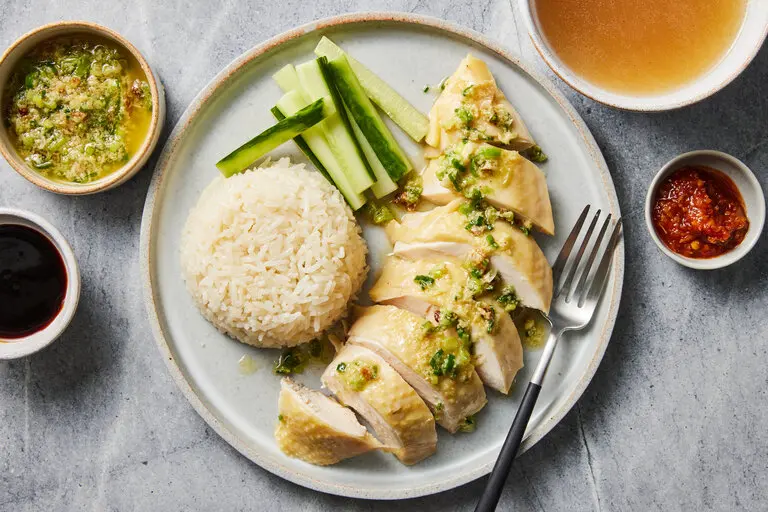
There’s something about Hainanese Chicken Rice that feels… quiet. Not flashy, not spicy, not showy—just comforting in that deeply satisfying way only simple food can manage.
It’s the kind of meal that doesn’t shout, it hums. Tender chicken, silky from a slow poach. Fragrant rice cooked in its broth. A gingery dipping sauce that ties everything together. You eat it and think, oh, this is how home should taste.
It’s originally from Hainan, China, but Singapore and Malaysia made it famous—each version slightly different, but all equally soothing. And yes, the vegan version works beautifully too: poached tofu or king oyster mushrooms paired with aromatic rice and that same zingy sauce. It’s calm food with quiet confidence.
🍚 Why This Dish Feels So Special
What makes Hainanese Chicken Rice brilliant is its restraint.
It’s built on humble things—chicken, rice, ginger, garlic—but when done right, every bite feels intentional. The rice isn’t just cooked with chicken—it’s cooked from the chicken, absorbing all that rich, subtle flavor.
It’s food that may not look fancy, but once you taste it, you get it.
🐔 Ingredients
(Serves 3–4)
For the Chicken (or Vegan Option)
- 1 whole chicken (about 3 lbs / 1.5 kg)
or 2 blocks firm tofu / 2 cups king oyster mushrooms, sliced thick - 1 thumb-sized piece of ginger, smashed
- 3 cloves garlic, smashed
- 2 stalks green onion
- Salt, to taste
For the Rice
- 2 cups jasmine rice, rinsed until water runs clear
- 2 tbsp chicken fat or oil (vegan: sesame oil or vegetable oil)
- 3 cloves garlic, minced
- 1 thumb ginger, grated
- 2 ½ cups chicken broth (or vegetable broth for vegan)
For the Sauce
- 2 tbsp fresh ginger, finely minced
- 2 cloves garlic, finely minced
- 1–2 tbsp hot oil (pour over the ginger and garlic to sizzle)
- 1 tbsp soy sauce
- 1 tsp sesame oil
- Optional: chili sauce for serving
🍴 How to Make It
1. Poach the chicken (or tofu/mushrooms)
Fill a large pot with enough water to submerge the chicken. Add ginger, garlic, and green onion. Bring to a gentle boil, then lower to a simmer. Add chicken and cook about 35–40 minutes, skimming foam.
If using tofu, simmer gently for 10–12 minutes; for mushrooms, about 8 minutes.
When done, remove and let rest. Don’t throw away that broth—it’s liquid gold.
2. Make the rice
In a pan, heat chicken fat or oil. Add minced garlic and ginger, sauté until fragrant but not browned. Add rinsed rice and stir for 1–2 minutes to coat each grain.
Pour in 2½ cups of that broth you saved earlier. Bring to a boil, then cover and cook on low for 15 minutes (or as your rice cooker directs).
3. Prepare the sauce
Place minced ginger and garlic in a small bowl. Heat oil until almost smoking, then carefully pour it over—the aroma will hit you immediately. Stir in soy sauce and sesame oil. Add chili if you like some heat.
4. Assemble
Slice the chicken (or tofu/mushrooms) and place neatly over the fragrant rice. Serve with the dipping sauce on the side, maybe a little cucumber for freshness.
🌿 Vegan Version That Feels Just Right
Poached tofu soaks in all that gingery broth and stays silky and delicate. King oyster mushrooms add a meaty chew—some people actually prefer them to chicken here. You can even use a touch of mushroom broth to deepen the umami in your rice.
The secret is to handle everything gently. This isn’t a recipe that likes rushing.
💡 Tips You’ll Thank Yourself For
- Keep the broth gentle. If it boils too hard, the chicken gets tough. Same goes for tofu.
- Rinse your rice really well—cloudy water means starch, and that makes sticky rice (not what we want).
- Use the broth for soup! Just add a few greens and you’ve got the perfect side.
- Don’t skip the sauce. The dish feels incomplete without that gingery kick.
🍲 Why It Stays in People’s Hearts
Hainanese Chicken Rice isn’t bold or dramatic—it’s comfort food in its purest form. Every element supports the other. The chicken (or tofu), the rice, the sauce—they don’t compete; they belong together.
It’s what you make when you want a meal that feels healing, in that quiet, nourishing way. And maybe that’s why so many cultures fell in love with it—it’s simple, honest, and made to be shared.